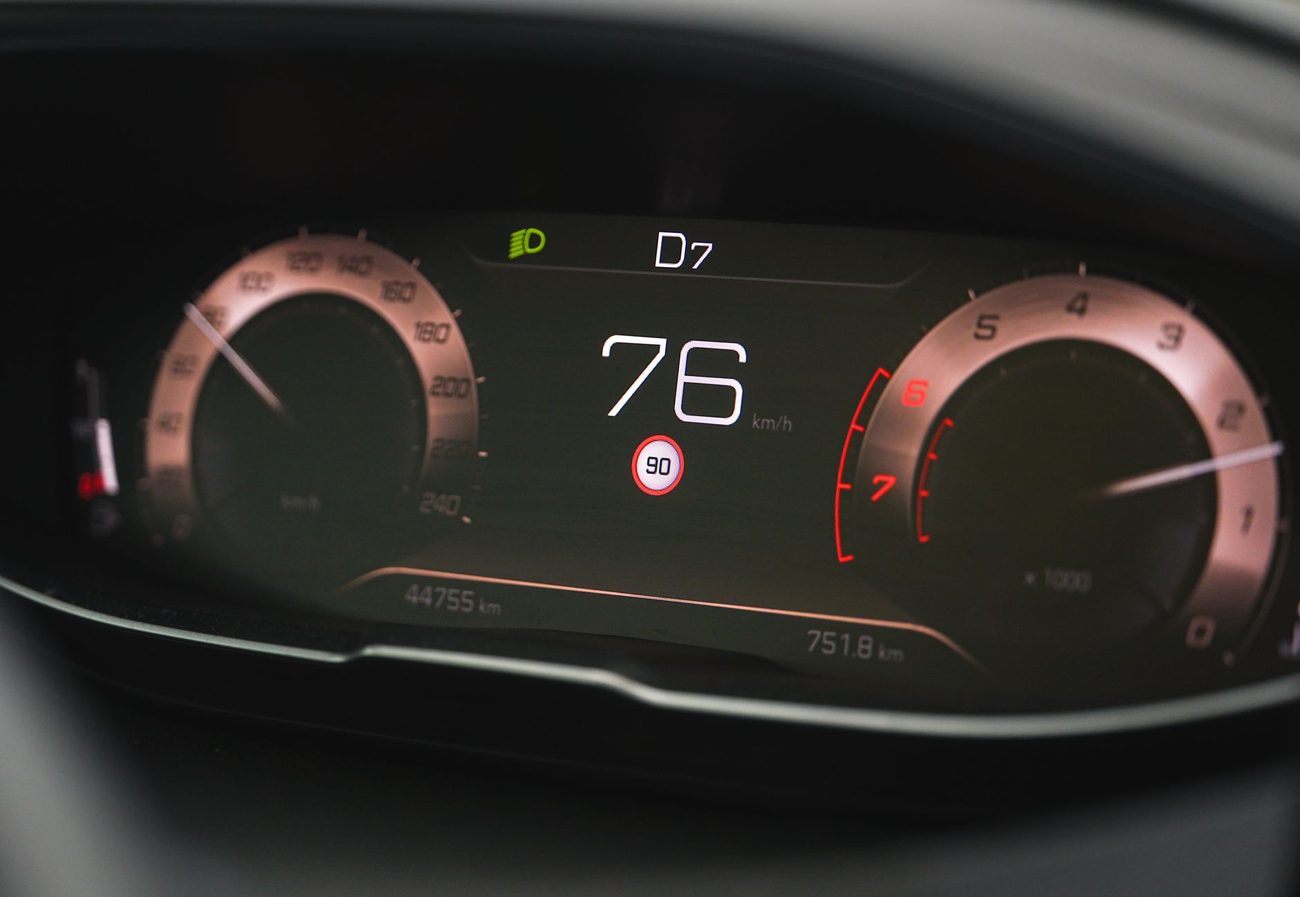
Tina called me at 4:40 this afternoon from the Hy-Vee parking lot. "It's at 199,998," she said. "Do I drive around the block, or do I wait for you?" I told her to wait. Some things you do as a family.
So at 5:30, all four of us were in the Sienna heading north on the Belt Highway, Lainey in the front passenger seat recording the odometer on Tina's phone and Garrett in the back trying to look like he didn't care. Rusty stayed home. The numbers rolled over to 200,000 at a red light, which was anticlimactic in the best way. Lainey cheered. Garrett said, "Cool." Tina honked once, lightly, and the guy in front of us turned around and looked confused.
Then we went home and had a cake. Lainey insisted. It said "200K" in blue frosting and had a small plastic van on top that she found in a toy bin in her closet. I want it on the record that the van sat in the garage while we ate it.
What 200,000 miles looks like on this van
We bought the 2011 Sienna LE from a dealer in 2016 with 61,000 miles on it. That means we've put 139,000 miles on it ourselves in just under ten years, mostly school runs, volleyball tournaments, grocery trips and a few road trips to Nebraska. It still has the original 3.5-liter V6 and the original six-speed automatic transmission. Neither one has ever been opened up.
It helps that the engine uses a timing chain rather than a timing belt, so there's never been a big, expensive belt job hanging over us. It also helps that Tina drives it like someone who expects to keep it.
Everything we've replaced since 2016
I went back through the notebook and the spreadsheet. This is the list of everything beyond oil changes and filters:
- Tires: it's on its third set since we bought it.
- Front brakes: a couple of pad jobs at the shop before the blog, then pads and rotors in our garage in April 2025 for $142 in parts.
- Rear brakes: once, at the shop.
- Spark plugs: once, at the shop, around 120,000 miles, which is what Toyota calls for on this engine.
- Serpentine belt: once.
- Wiper blades, bulbs and cabin and engine air filters: many times, all cheap.
- Air conditioning compressor: June 2025, at the shop, $1,140, on a 93-degree day when it couldn't wait.
- Passenger sliding door cable: July 2025, in the garage, $86 plus a Saturday.
- Battery: January 2026, $164, after the 6-below morning.
That's it for the big stuff. There have also been the usual fluids: transmission fluid drained and refilled once at the shop, brake fluid flushed once, coolant once. None of those were exciting.
I do this math whether anyone asks or not. Repairs and maintenance on the van since 2016, not counting gas or insurance, come to a little under $7,000 in the spreadsheet. Spread across 139,000 miles, that's about 5 cents a mile. Gas at about 19 miles per gallon mixed is the bigger number, around 15 cents a mile at today's prices. Even so, a newer van with a payment would cost us far more per mile than this one, and I spend my workday thinking about exactly that kind of math.
What happens next
The van is worth about $4,800 on paper, which is a sobering number to put next to 200,000 miles of family history. It's also the reason we're thinking about changes on the insurance side. With Garrett licensed as of January, our premium nearly doubled, and paying for collision coverage on a $4,800 van is something I'm going to talk to our agent about.
Mechanically, I'm keeping an eye on a few things. The front struts are original and it rides a little soft over the railroad tracks on the way to Krug Park. The transmission shifts fine, and I'd like to keep it that way.
A 200,000-mile minivan is not a status symbol. It is a vehicle that has never left us stuck somewhere it mattered, and I'm grateful for that every time it starts. Lainey wants to do another cake at 250,000. I told her we'd talk about it in 2030.
For now, the notebook entry reads: "3/13/26. 200,000. Belt Hwy at the light. Cake." We'll run it till it tells us otherwise.