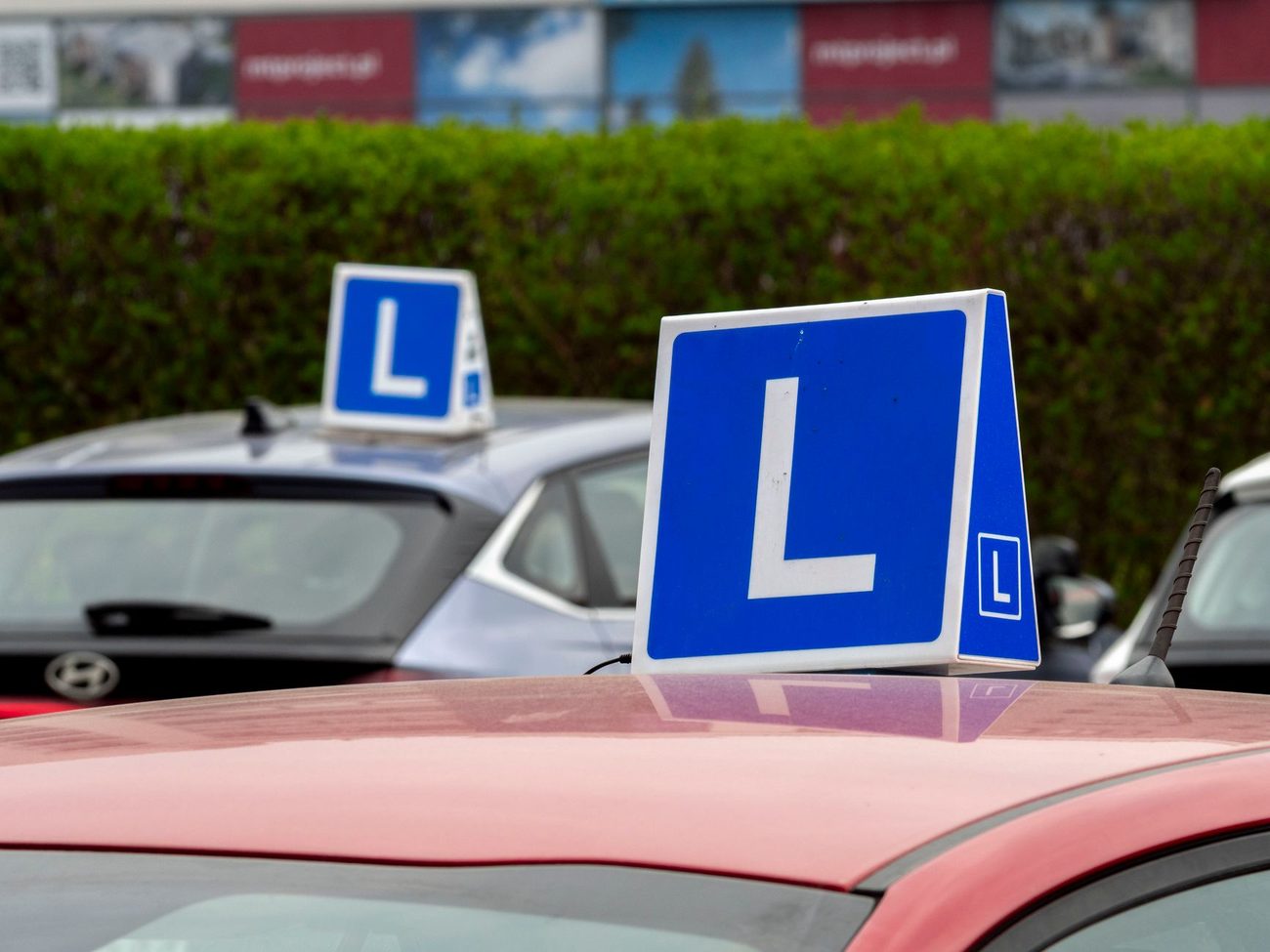
The notebook in the van's glovebox is a green spiral one, college-ruled, $1.29. On the first page, in Garrett's handwriting, it says DRIVING LOG and then, underneath in mine, "Write it down before you get out of the car." That second line has done more work than anything else in this whole process.
Missouri wants 40 hours of supervised driving before a 16-year-old can get an intermediate license, and 10 of those 40 have to be at night. A parent signs off on the total when you go for the license. Nobody from the state is going to come audit your glovebox, but I'm a dispatcher, and at work if it isn't logged it didn't happen. Same rule here.
How the log is set up
I have kept a mileage notebook in the Silverado's door pocket since 2016, every fill-up and every oil change, so I just borrowed the format. One line per drive, these columns across the page:
- Date
- Start time and end time, then total minutes
- Day or night (D or N, circled)
- Where we went, short version ("Krug Park loop," "church lot, parking")
- Weather and road condition
- One thing that went well, one thing to work on
- Initials of whoever was in the passenger seat
At the bottom of each page we total the minutes and carry it forward, like a checkbook. Once a month I copy the totals into my spreadsheet, because of course I do. Tina says I've turned our son's adolescence into a fleet report. She's not wrong, but the totals are right.
The "one thing to work on" column was Tina's idea and it's the best column on the page. It keeps the comments to one item instead of a running commentary from the passenger seat, which, I'll admit, was where I was headed.
Where we practice
We've settled into Sunday afternoons, right after lunch, when traffic on the north end of town is about as light as it gets. Most drives are in the Sienna, since it's what he'll most likely be driving for a while. It's also a big vehicle to learn in, and my theory is that if you can park an eight-passenger van you can park anything.
The progression so far:
The church lot. A big empty lot on a Sunday afternoon once the services are done. This is where we did the first three or four hours: starting, stopping smooth, turning, backing into a space, pulling through. Boring, and exactly right.
The Krug Park loop. Slow, curvy, people walking, kids on bikes, the occasional car stopped for no reason. It teaches him to scan. He went around it six times one afternoon until his hands stopped doing the ten-and-two death grip.
Neighborhood streets. Four-way stops, parked cars, a guy backing out of his driveway without looking. Real life, at 25 miles an hour.
Frederick Avenue. Our first taste of traffic lights, turn lanes and people who are in a hurry. We've done it twice. He's fine. I'm working on it.
The Belt Highway and the interstate can wait. There's no prize for getting there fast.
As of this weekend the log says 9 hours and 40 minutes, all daytime. That's two months in. If we keep up roughly an hour and a half a week, we're at 40 sometime in the fall, which is well ahead of his 16th birthday in January. He also needs to hold the permit at least six months anyway, so there's no rush that the calendar would reward.
The night hours are going to be the hard part, and I can already see why. In May the sun goes down after 8:30, and Sunday night is a school night. We'll have to make room for those in the summer, when bedtime is a looser concept.
What's worked and what hasn't
What's worked: short drives count. Twenty minutes to Hy-Vee and back is twenty minutes. A lot of our hours come from errands we were going to run anyway, with him driving instead of me. Tina takes some drives too, so he gets two different styles of passenger, one of whom doesn't breathe through her teeth at yellow lights.
What hasn't: trying to do a long drive when he's tired after school. Twice we stopped early because he was making the kind of small mistakes you make when your brain has already gone home. A short good drive beats a long sloppy one. We log it either way.
And the rule on the first page holds. Write it down before you get out of the car. If you wait until later, you'll guess, and you'll guess generously.