Two eyes, about knee high, in the ditch on the right side of US-36. That was Thursday at 6:12 in the morning, and by the time I'd lifted off the gas there were three more pairs behind the first. They stayed put. I went by at 45 with both hands on the wheel and my heart somewhere near the dome light.
That's October around here. From now through December, deer and cars spend a lot of time in the same places, and my commute puts me right in the middle of it at the worst hour of the day.
Why this drive, why this time of year
I'm a dispatcher, and my shift starts at 6:30, so I leave the north end of St. Joseph around 6:05. The last stretch of my 11 miles runs out US-36 on the east side of town, with fields, creek bottoms and tree lines on both sides. Right now the sun doesn't come up until well after seven, so the whole drive is in the dark. When the clocks fall back next weekend I'll get a little light for a few weeks, and then the days shorten again and it's dark both ways by December.
Fall is breeding season for whitetail deer. Bucks are chasing does, does are running from bucks, and none of them are looking both ways. Add harvested fields that leave less cover, hunters moving through the timber, and the fact that deer move most around dawn and dusk, and you get the busiest stretch of the year for deer collisions. Anybody who has driven in northwest Missouri for more than one fall knows somebody who has hit one.
The truck has 139,700 miles on it, and in that time the Silverado has never hit a deer under me. I'd like to keep it that way, so here is what I actually do.
How I drive it in October and November
- High beams whenever there's no oncoming traffic. They pick up eyes in the ditch much earlier.
- Five under the limit on the open stretch. It's about 40 seconds slower over the whole drive. I timed it.
- Eyes on the shoulders and the tree lines, not just the lane. Deer don't come from the middle of the road.
- If I see one, I look for the second and third. They almost never travel alone this time of year.
- Brake hard and straight if one steps out. Don't swerve.
- No phone, no coffee in my hand on that stretch. The coffee waits for the parking lot.
The swerving one is the rule people argue with me about. The instinct is to yank the wheel. But a deer is a few hundred pounds and the truck is about 5,000. Hitting a deer is bad. Leaving the road at 55 into a ditch, a culvert or an oncoming lane is a lot worse. Every trooper and every insurance pamphlet I've ever read says the same thing: brake firmly, stay in your lane, and let the truck take the hit if it comes to that.
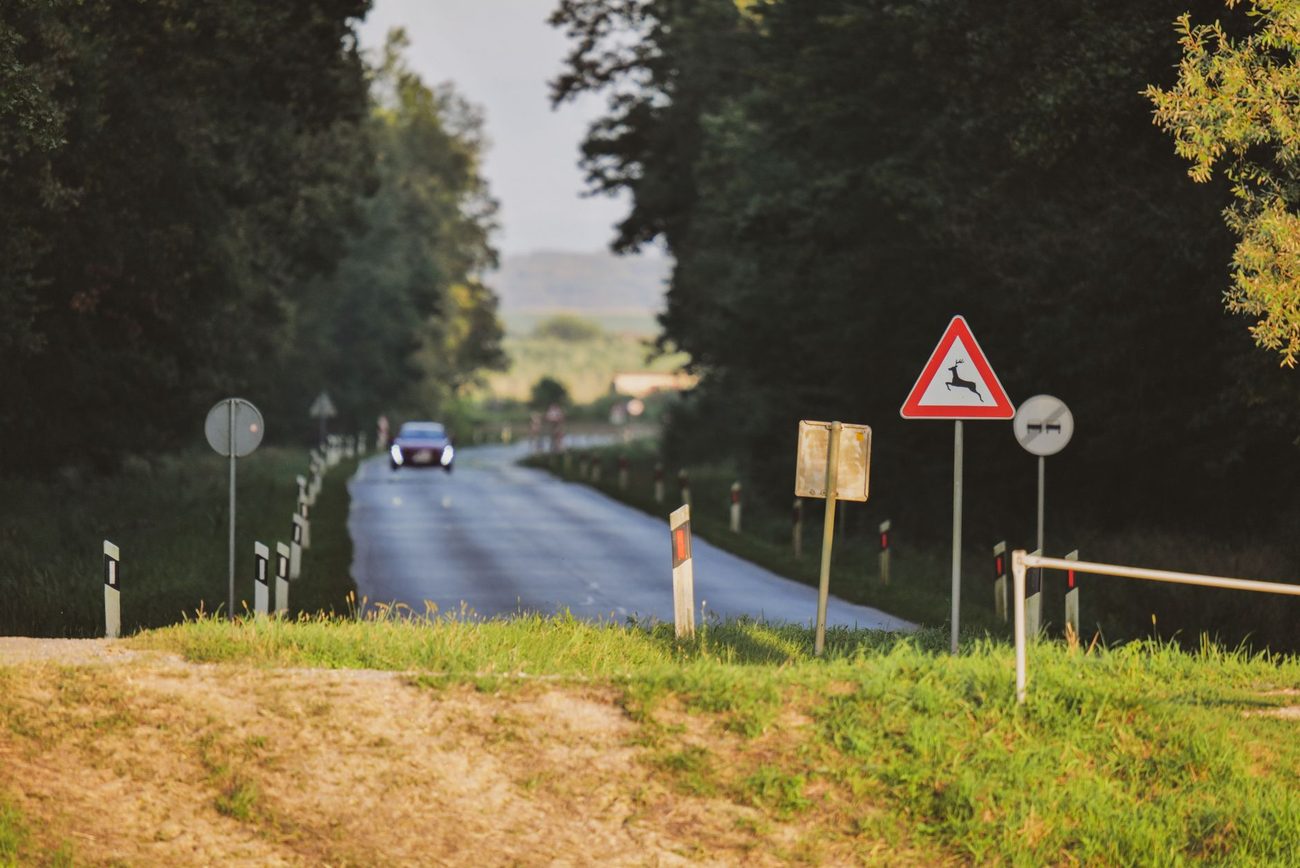
I also pay attention to the deer crossing signs. I used to think of them as decoration. They're not. They go up where the state has seen a pattern, and the one near my exit is posted right where the tree line comes down to the road.
What I check before the season
Headlights matter more in October than any other month. I cleaned both lenses this month, made sure both low and high beams work and checked the aim against the garage door. A dim, hazy headlight cuts your warning time in half, and you won't notice until you need it.
I also looked at our insurance before the season, since we were already getting new quotes this month. A deer hit is usually a comprehensive claim, not collision, and our agent told me animal strikes typically aren't treated as at-fault. We carry comprehensive on the truck with a $500 deductible. I don't love paying for coverage, but on a truck I drive in the dark through deer country five days a week, I'd be a fool to drop it. Your situation and your insurer may handle it differently, so ask your own agent.
If you do hit one, pull over with your flashers on, stay off the road, and don't walk up to an injured deer. Take pictures, call it in if the road is blocked or anyone's hurt, and check that your lights and radiator are intact before you drive on. Coolant on the pavement means the truck goes home on a hook.
Tina asks me to text her when I get to work every morning from October to Christmas. I do it from the parking lot, two words: "Made it." It's a habit we started a few years back, and honestly it slows me down more than any rule on the list, because I know someone's waiting on it.
Three more pairs of eyes this morning, by the way. Same ditch. They must have a lease on it.